
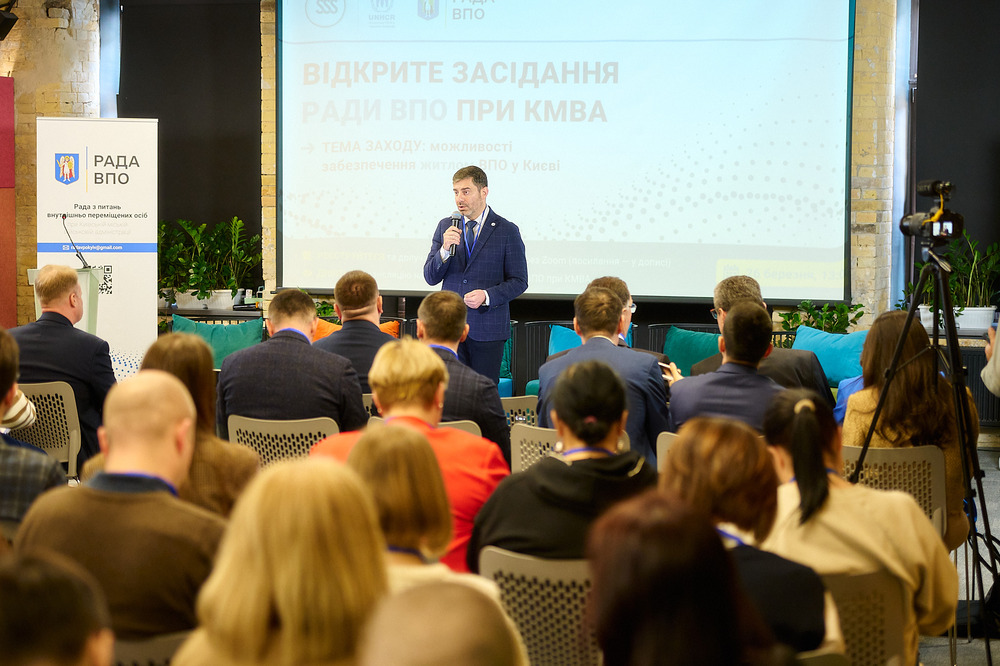
The media Rubryka has published an in-depth article on how IDP Councils influence local policies, budget decisions, and community recovery processes in practice. Read the full original article by Vladyslav Lesyk, “Not only to consult, but to influence: how an IDP Council can become an effective mechanism in its community”, on the IDP Councils Portal.
How displaced Ukrainians influence decision-making in their communities
After Russia started its full-scale invasion of Ukraine, millions of Ukrainians were forced to leave their homes. To make sure displaced voices were heard and welcomed, hosting communities across the country set up councils for internally displaced persons (IDPs). These bodies are there only to offer recommendations, but in practice, they can influence local government decisions — helping displaced people integrate, recover, and shape their communities from within. Rubryka looked into how practical these IDP councils are and whether they create meaningful change.
What’s the problem?
According to Ukraine’s social policy ministry, as of November 2025, nearly 4.6 million Ukrainians are internally displaced. As the full-scale war goes on, their number continues to grow: since the beginning of this year alone, more than 190,000 people have been displaced from front-line areas.
In 2019, communities trying to help displaced Ukrainians adapt to their new towns introduced IDP councils, advisory bodies. Their numbers skyrocketed after 2023, when the government officially recognized them.
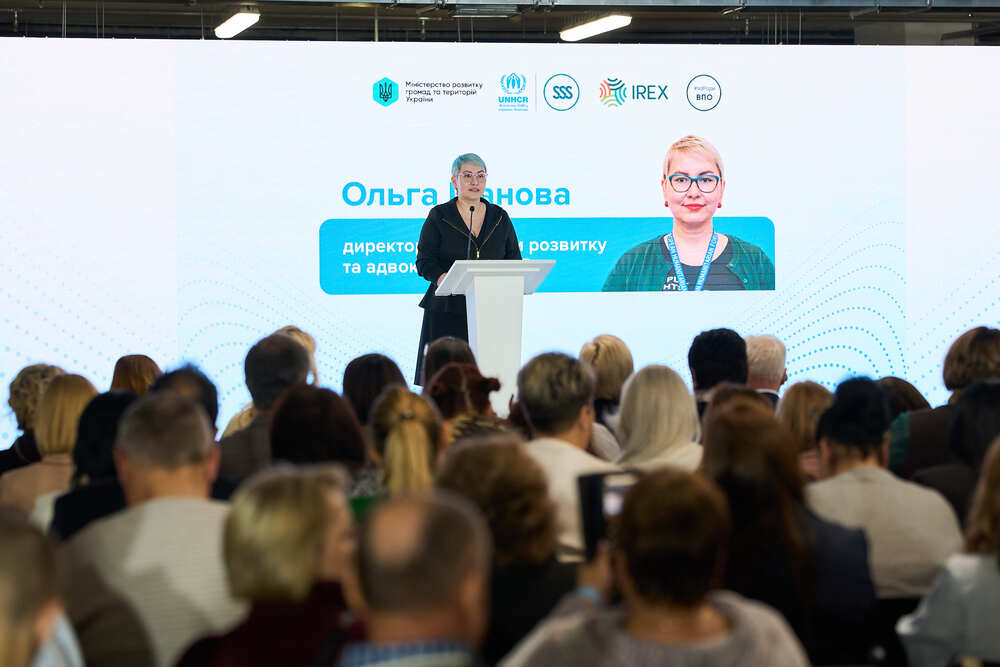
Today, over 800 of these councils operate across various regions, districts, and local communities. Things have changed a lot, though. According to Olha Ivanova, a director for advocacy and development programs at the charity fund Stabilization Support Services, these groups have matured, and most are no longer just simple advice-givers.
“They truly influence local policies, propose solutions that change the lives of displaced people — and very often, the lives of the entire community.”
Stabilization Support Services launched a network for IDP councils and continues to monitor its work. Rubryka spoke with Olha Ivanova to find out whether these councils actually impact community life and local self-government.
What’s the solution?
How IDP councils monitor leadership
Olha Ivanova points out that IDP councils weren’t set up to check the books or run audits. Yet, they can provide a strong safeguard, which means they can help mitigate corruption risks and inform better decisions.
“These are real people who receive services and see community decisions on the ground and can ask the right questions before something goes wrong,” Ivanova explains.
In practice, councils influence decisions by assessing the needs of displaced people and officially recommending which projects are genuinely worthwhile to pursue. When the argument comes directly from displaced people, expert Olha Ivanova says, it helps prevent decisions that fail to bring social benefit or raise suspicion.
In reality, councils influence decisions by assessing what displaced Ukrainians need most and then officially recommending which projects truly deserve investment. These recommendations, which come directly from displaced people, help avoid choices that offer no real social value or that seem questionable, says expert Olha Ivanova.
She adds that in many communities, councils essentially conduct a primary civic audit. They analyze local programs, executive committee decisions, and planned purchases. Even without formal legal power, their simple clarifications or comments often redirect the conversation.
“Councils often check whether the results match the stated goals — whether a facility is accessible for IDPs or whether it creates new barriers. This matters because many decisions are made without considering real users,” she says.
Getting councils involved in working groups is crucial because then they join the conversation from the very beginning. By having a say during the planning stage, they can spot potential problems and cut down risks long before any action is taken.
The IDP council in the Kalush community, Ukraine’s western Ivano-Frankivsk region, also spoke with Rubryka. Its head, Valeria Prudnikova, says about 5,000 displaced Ukrainians now live in the community. The council, established in 2023, includes 19 people, 15 of whom are displaced. It focuses on advocacy and monitoring local programs related to IDPs.
Prudnikova says Kalush hosts meetings dedicated to IDP and youth issues every Thursday. A council representative attends the meeting to voice pressing problems and share proposals on behalf of displaced residents. The council also regularly prepares submissions and written requests for the city council to influence decisions that affect the lives of IDPs in the community.
“We receive responses on time, and most of our proposals are approved,” Prudnikova says.
Role of displaced Ukrainians in recovery
Reconstruction is one of the areas with the highest risk of corruption. As analyst Yaroslav Pylypenko told Rubryka, Dozorro, a Ukrainian initiative that monitors public procurement, found potential overpayments in every second procurement among 600 analyzed construction projects.
IDP councils want to be involved in recovery to make sure that war-affected communities — where displaced Ukrainians are from — are rebuilt transparently. At the Third National Forum of IDP Councils in November, they offered their solution.
Organizers presented the declaration of intent called “Sustainable and Quality Reconstruction: Engaging IDP Councils in Recovery.” The document publicly commits government institutions, civil society groups, international organizations, academics, and businesses to involve displaced people and affected communities in decisions regarding post-war reconstruction.
Ivanova sees the document as a practical advocacy tool: “The declaration is a way to turn the idea of displaced people participating in reconstruction from a ‘nice-to-have’ to a real action. It’s still in the launch phase, but it is meant to work on several levels.”
The first level is international. When a donor organization signs the declaration, it publicly commits to consulting with IDP councils. It needs to consider their input during project planning and evaluation, and ensure that the rights of displaced Ukrainians are protected during the distribution of humanitarian aid and reconstruction.
At the national level, the declaration reinforces the argument that IDP councils should be integral to recovery strategies and interagency working groups. Displaced Ukrainians need to be involved in long-term policy decisions.
At the local level, the declaration pushes communities to set up procedures, which include councils in working groups, discuss priorities with displaced residents, and assess the impact on vulnerable groups before approving projects, says Stabilization Support Services expert.
Displaced Ukrainians’ influence on funding
IDP councils can also influence local funding. Many communities are already moving toward involving councils when budget programs are only being formed. According to Olha Ivanova, they should do it early, not after everything is decided.
Councils can:
- join working groups
- submit budget proposals based on their regular research and surveys
- attend budget commissions, hearings, and local council sessions
- monitor whether budget projects allocate funds for displaced people and whether the programs meet real community needs.
“This kind of involvement allows councils not just to advise, but to actually influence funding priorities, ensure transparency, and make sure the needs of displaced people don’t get ‘lost’ in the long list of expenses,” Ivanova says.
How IDP councils can gain more influence
Research by Stabilization Support Services shows that the influence of IDP councils often depends on the political will of the local authorities with whom they work. Olha Ivanova says it can be strengthened through regulations. For example, local governments can be required to review council recommendations within a clearly defined timeline.
The study also found that IDP councils often lack access to important data on housing stock, waiting lists, funding, or procurement. In many cases, councils rely on their own surveys and research. It can be changed, Olha Ivanova notes. Communities can compile a list of data to which councils must have guaranteed access and make the procedure official through local regulations.
Does it really work?
How displaced people shaped decisions: success stories
Ivanova says you can find examples of IDP councils making a difference in every region. Often, it comes down to people’s initiative — sometimes one determined activist can achieve more than an entire region with far greater resources.
Here are some of the stories she shared:
- In the Rivne region, IDP councils helped shape local housing policy. They reviewed how national and local housing programs were being implemented and pushed for updated rules on forming the housing fund. To restart the registration process, they called to update the commission that manages the IDP housing registry. They also launched a campaign explaining the rights of displaced people to temporary housing and how to apply for it.
- In the Poltava region, one IDP council became the driving force behind the community’s new housing program for 2024–2027. Ivanova says it isn’t just paperwork; it includes real tools, such as a housing fund, reconstruction projects, property purchases, and dedicated financing.
- In the Mykolaiv region, a council initiated a Social Services Center. Now residents can access home care, family support, psychological help, and even equipment rental — all within their own community, without having to travel to larger cities.
“Overall, the success of a council depends mostly on the motivation of the people in it. We’ve seen many cases where people created systemic change from nothing. And, of course, when local authorities are open to cooperation, everything moves more quickly. A council is simply a tool — some use it fully, others barely use it at all. But when the IDP community has real needs and active people step forward, you can accomplish a lot,” Ivanova says.
This article has been produced with the financial assistance of the European Union under the Open Government Partnership Europe initiative. The contents of this document are the sole responsibility of the Institute of Successful City and can under no circumstances be regarded as reflecting the position of the European Union.