
Vitalii Karpenko is a displaced person from Donetsk who has been living in Chernivtsi since 2015. After the full-scale invasion, he became actively involved in humanitarian work and today leads both the city and oblast IDP Councils. His experience is an example of effective local advocacy for change. He spoke about the achievements of one of the most successful Councils in an interview with the IDP Councils Portal.
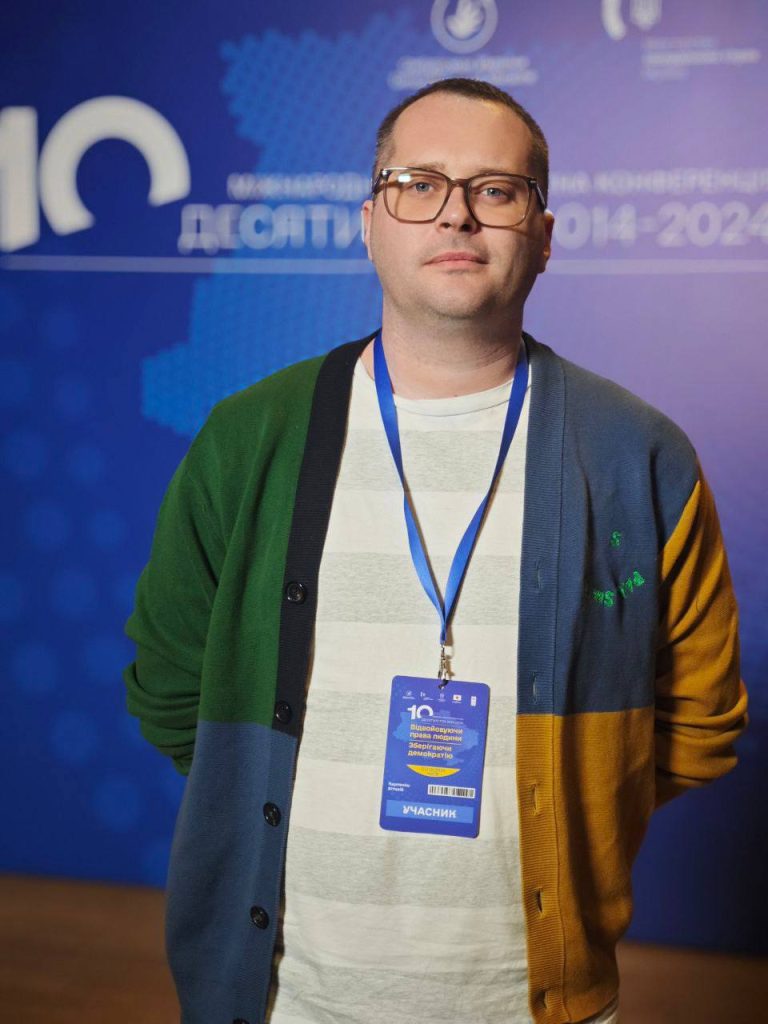
How IDPs Transform the Community
The IDP Council in Chernivtsi was the first to be established in Ukraine after the full-scale invasion. Its work began in July 2022.
— Mr. Vitalii, how did you get involved with the IDP Council?
— I was born in Donetsk and lived there until the war began. I have been living in Chernivtsi since the first wave of displacement. When I arrived, there wasn’t as much support for IDPs as there is now, after the full-scale invasion. I remember very well how difficult it was to adapt to a new city. So, since 2022, I have been actively involved in humanitarian initiatives in Chernivtsi. In particular, I participated in the work of the first humanitarian hub.
For almost a year, I regularly attended IDP Council meetings, but I was not a member. I raised important issues faced by displaced people. I explained, from my own experience, that even small things that might seem insignificant to people who have never moved can be very important for those under stress. Eventually, I was invited to join the Council. I immediately started as the Head of the IDP Council under the Chernivtsi City Council.
— Where did your work begin?
— My work began with a very important issue that I raised in the public sphere: the availability of temporary housing for IDPs. I want to thank the Charity Foundation “Stabilization Support Services” for their support here. This was our Council’s first large-scale information campaign: we provided information, developed leaflets, and created brochures about housing opportunities for displaced people. Later, I was elected Head of the IDP Council of Chernivetska Oblast.
— What challenges have you faced in working with the local authorities?
— In Chernivtsi, there is no resistance to our initiatives from local authority representatives who are members of the Council. We have established communication with the Department of Social Policy of the City Council and with Deputy Mayor Yurii Lysiuk, who is also the Deputy Head of the IDP Council. Sometimes local residents do not fully understand the issues; they do not always see them as a priority. But overall, the idea of creating the Council was quickly supported.
On Key Advocacy Achievements
— What local changes have you managed to implement in Chernivtsi?
— One of the key achievements is the information campaign on temporary housing and the amendments to local social protection programs in 2023. Thanks to these changes, vulnerable IDP groups now receive the same support as local residents. For example, one-time assistance for treating children with disabilities, and funds for expensive medications. We also developed a program to integrate IDPs into the Chernivetska community. A survey revealed that many people needed access to public laundries and baths. We included these services in the program, and they are in high demand. We even added another social laundry to the program.
The next step was resolving the problem of an unregulated mechanism for receiving public transport benefits. Initially, this affected children from IDP families and family-type orphanages who were studying online as due to the new electronic ticket system, they couldn’t access the benefit. The IDP Council developed a solution: we collected applications and certificates from schools, and the children received free travel. Later it became clear that the problem was broader and also affected pensioners, people with disabilities, and other beneficiary categories. The city amended the program, and now it’s possible to get a discounted electronic ticket through the Administrative Services Center. Communities from the region also started joining the initiative. There are now about ten of them.
— What else have you managed to change?
— We faced a situation where beneficiary categories among IDPs did not have access to the free dental prosthetics program. A Chernobyl disaster liquidator approached the IDP Council — he was entitled to the benefit, but because funding was transferred to the local level, he couldn’t access it. We helped him receive the assistance through a charitable foundation, and then we formed a working group to study the problem’s scope. We conducted a survey among IDPs. The Finance Department estimated the approximate funding needs, and on September 10, 2024, the local authorities amended the Regulations. Now IDPs have access to dental prosthetics on the same level as locals. Despite queues and limited resources, the program was finally moved forward.
On the Cooperation with Authorities
— In your opinion, what arguments work best in communicating with local authorities when it comes to advocating for change?
— First and foremost, we always show that it’s not just an isolated case. We analyze the problem, demonstrate that it’s systemic, and outline the resources already mobilized to address it. This helps build an argument: we’re not just reacting to an individual need, but trying to establish a sustainable mechanism.
A good example is the temporary housing program for IDPs. In Chernivtsi, under the Cabinet of Ministers of Ukraine’s Resolution No. 495, two high-rise apartment buildings are being constructed. These are not temporary accommodation centers or dormitories — they are full-fledged apartments, with a European donor already financing the project. Around a thousand people will receive housing.
We promoted the idea at the IDP Council meeting, arguing not only the need but also the existence of a legal framework and statistics: how many people plan to stay in the community. This helped secure funding and explain to the donor how the housing would be used.
This year, the IDP Council also submitted recommendations to change the electricity tariff in the premises where IDPs temporarily lived. As a result, the amounts on the bills were almost halved.
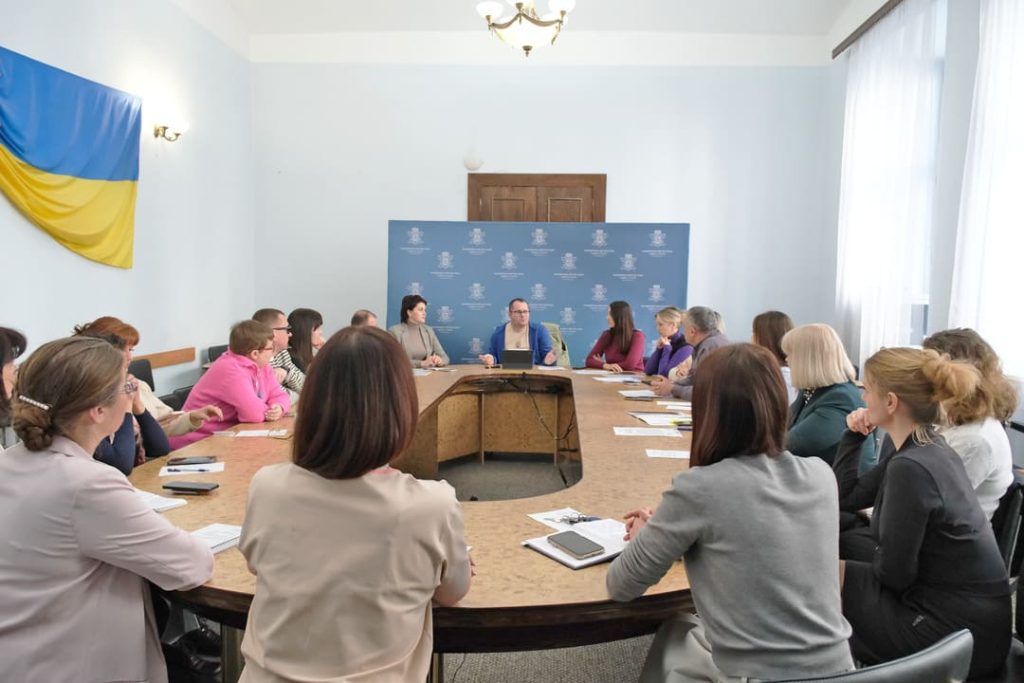
New Challenges: Child Protection and Education
— What is the IDP Council under the Chernivtsi Executive Committee currently working on?
— One of the focus areas is protecting the rights of internally displaced children. We’re seeing cases where, after a father was mobilized to the army, a child is left without parental care. Or a child is taken in by parents’ friends without any official decision. This shouldn’t happen. We want to establish effective communication between all services — police, social services, the education department — so that in such cases, actions are prompt and coordinated.
Another issue is encouraging internally displaced children to return to offline schooling. Currently, out of eight thousand children in schools, only two thousand attend in person. Many continue remote learning at their previous schools in their former places of residence. We want to create a gentle integration program to make the return to offline schooling smooth rather than through a ban on remote learning, as it was last year. We also want cultural, educational, and sports events to be organized for all children in the community, not just IDPs.
This publication was made with the support of UNHCR, the UN Refugee Agency in Ukraine. The content of the publication is the sole responsibility of the Charitable Organization “Charity Foundation “Stabilization Support Services” and does not reflect the views of UNHCR.