
IDP Councils across the country demonstrate that advocacy is not about loud slogans, but about daily hard work. This work can change local policies, improve access to services, and build a new culture of cooperation between authorities and citizens.
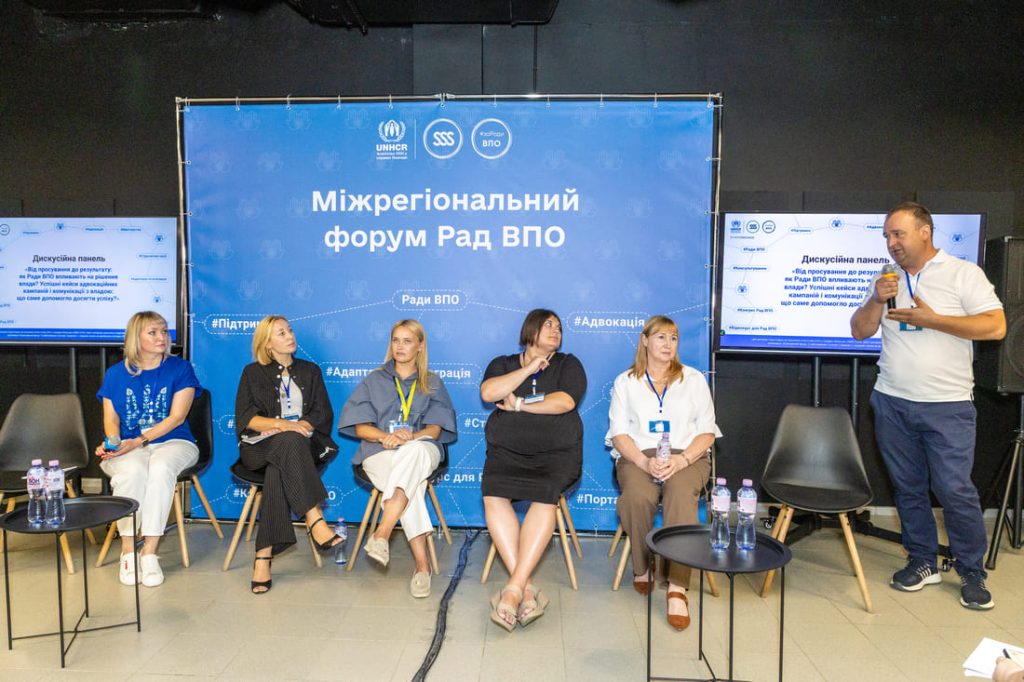
This material about the experiences of IDP Council members was prepared based on the discussion panel “From Advocacy to Results: How IDP Councils Influence Government Decisions? Successful Cases of Advocacy Campaigns and Communication with Authorities — What Helped Achieve Success?” held during the Eastern Ukrainian Forum of IDP Councils in Dnipro on September 4.
Building a Community Without Dividing Locals and IDPs in Pavlohrad
Tetiana Shyk, Head of the IDP Council under Pavlohrad City Executive Committee:
“More than 20,500 IDPs are officially registered in Pavlohrad community. To support them, our IDP Council initiated adding integration measures for internally displaced persons to the existing local programme.
With a ULEAD grant, we conducted surveys among IDPs, local businesses, and residents, and identified key areas: information support, inclusion, employment, and entrepreneurship development.
A separate achievement was advocating for housing solutions. Together with partners, we created a coordination council, prepared an information leaflet for IDPs, and organized an awareness campaign. As a result, over 432 families registered to receive temporary housing.
To have more development opportunities, we founded a public organization. Today, our NGO «Integration. Movement. Recovery» actively applies for grants and implements social and charitable projects. We are building a community without division between locals and IDPs, where everyone can both give and receive support.”
A Space for Integration and Recovery in Sumska Oblast
Valentyna Ihnatusha, Member of the IDP Council under Romny City Council, Project Coordinator at Charity Foundation Rokada in Sumska Oblast:
“Almost 90% of IDPs in Sumska oblast are local residents of the oblast. In Lypova Dolyna community, the IDP Council together with Rokada, the local council, NGOs, media, and the social protection department have achieved tangible results through daily work.
Council members received training, conducted research, and developed a project that successfully won a competition.
Thanks to this, an integration space for IDPs appeared in the community. It hosts activities to help IDPs adapt to community life and emotional support meetings for mothers with children.
The received grant allowed us to fully equip the space, which has become a place of support and development for IDPs.”
Invisible Advocacy Felt by Hundreds Every Day
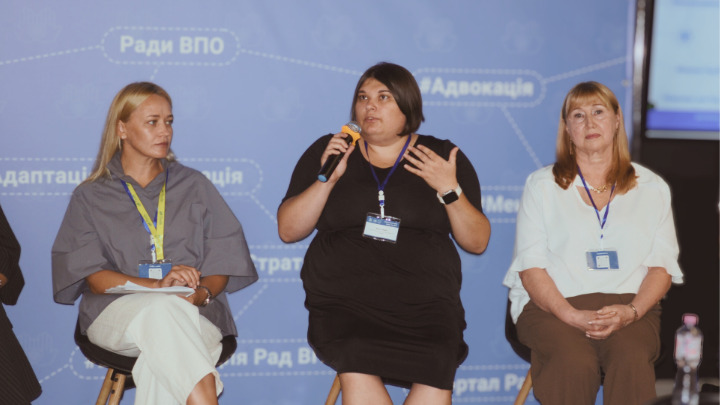
Anna Slavko, Member of the IDP Council under Sumy City Council:
“Our IDP Council has existed for two years. It includes 8 representatives of local authorities, 8 IDPs, and 6 representatives of civic and charitable organizations.
At the beginning, we needed mentoring. With support from the Charity Foundation Stabilization Support Services, we developed a work programme, set goals, and created a clear plan. Strategic planning and mentorship greatly increased our efficiency. Later, we also received help with analyzing local policies, especially regarding IDP rights.
Initially, the community had no specific act focused on IDPs. Some support measures were scattered across different programmes, such as the ‘Myloserdia’ programme. But no one expected a full-scale invasion back in 2021, so there were no specific mechanisms for newly arrived IDPs.
The situation changed dramatically in 2022, when most IDPs arrived. They were not eligible for social programmes, which required 5 years of residence in the community.
Thanks to advocacy and continuous dialogue with the local government, we achieved changes: now IDPs registered in the community for at least 1 year can receive support (under the 2025–2027 ‘Myloserdia’ programme).
This shows how joint efforts can change policies and make them truly inclusive. Our advocacy is not something you can photograph, but it improves the lives of hundreds every day. It’s systematic work requiring focus and communication skills.”
How IDP Council Advocacy Transforms Communities
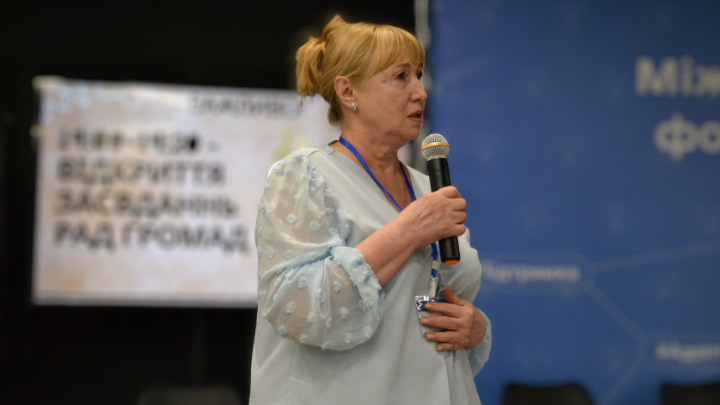
Iryna Lisitsyna, Member of the IDP Council under Pivdenne City Council, Kharkivska Oblast, Head of the Social Protection Department:
“We created operational and strategic plans with support from the Carity Foundation Stabilization Support Services. That was the start of our advocacy work. We didn’t expect to reach such results. Success became possible thanks to the initiative of council members and the openness of local authorities.
First, we formed an initiative group and divided responsibilities. Then we monitored the social sphere: checked how IDPs receive administrative services at the Administrative Services Center, whether information cards comply with legislation, and analyzed local social support programmes.
We studied the procedure for one-time assistance for IDPs. The programme was well-designed, but there was no systemic support for IDPs.
We proposed: updating information cards, expanding the list of services, and introducing support measures and one-time financial aid.
As a result, our proposals were accepted: the list of administrative services was expanded. We received official council and executive committee decisions. This became an important example of how consistent advocacy by an IDP Council can lead to real change.”
Chernihiv Experience: Involving the IDP Council in Local Policy-Making
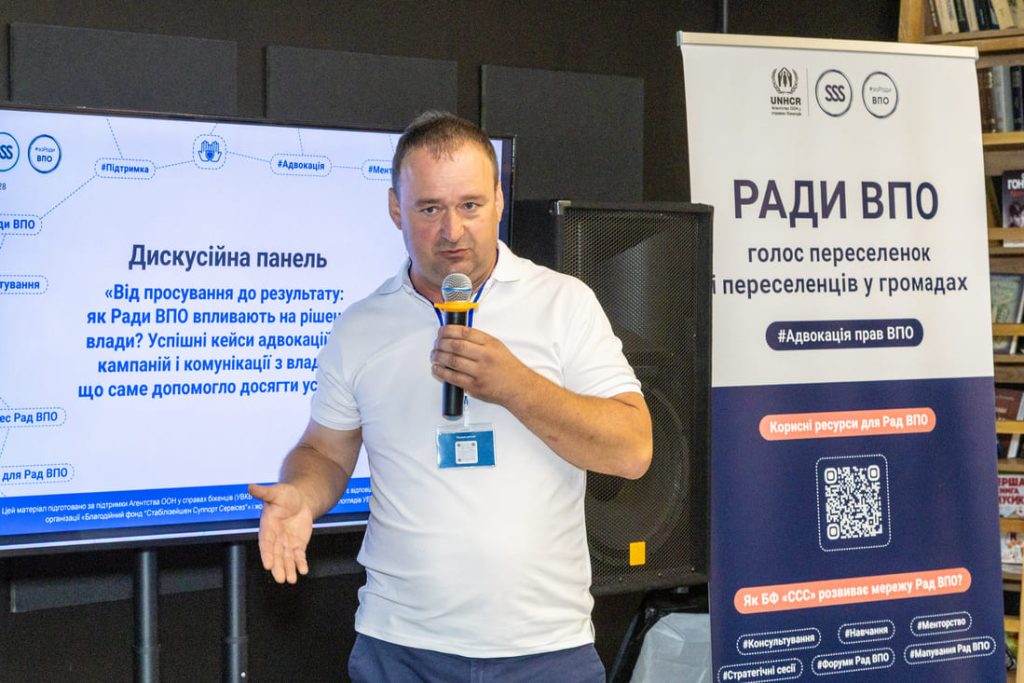
Andrii Shcherbatyi, Deputy Head of the IDP Council under Chernihiv Regional Military Administration:
“Lack of housing for IDPs remains a major problem in Chernihivska oblast. Our IDP Council actively works to solve it and takes part in meetings and working groups on housing issues.
On the initiative of the Administration, a working group was created to monitor available premises suitable for temporary housing and a coordination commission to register real estate. Our council delegated representatives to these bodies to have direct access to decision-making.
This allowed us to influence the list of facilities, prioritize their renovation, and use them as temporary housing. We didn’t wait for ready-made solutions, we joined the process.
At the same time, we established direct communication with the regional employment center and the regional development agency to give IDPs access to job and entrepreneurship opportunities. Now we hold joint open meetings where IDPs can receive expert consultations.
The key factor of success was effective communication. The IDP Council became a bridge between IDPs and service providers, overcoming the information gap and ensuring more systematic support in the region.”
The event is organized by the Charitable Organization “Charitable Foundation “Stabilization Support Services” with the support of UNHCR, the UN Refugee Agency in Ukraine.
This publication was made with the support of UNHCR, the UN Refugee Agency in Ukraine. The content of the publication is the sole responsibility of the Charitable Organization “Charity Foundation “Stabilization Support Services” and does not reflect the views of UNHCR.