
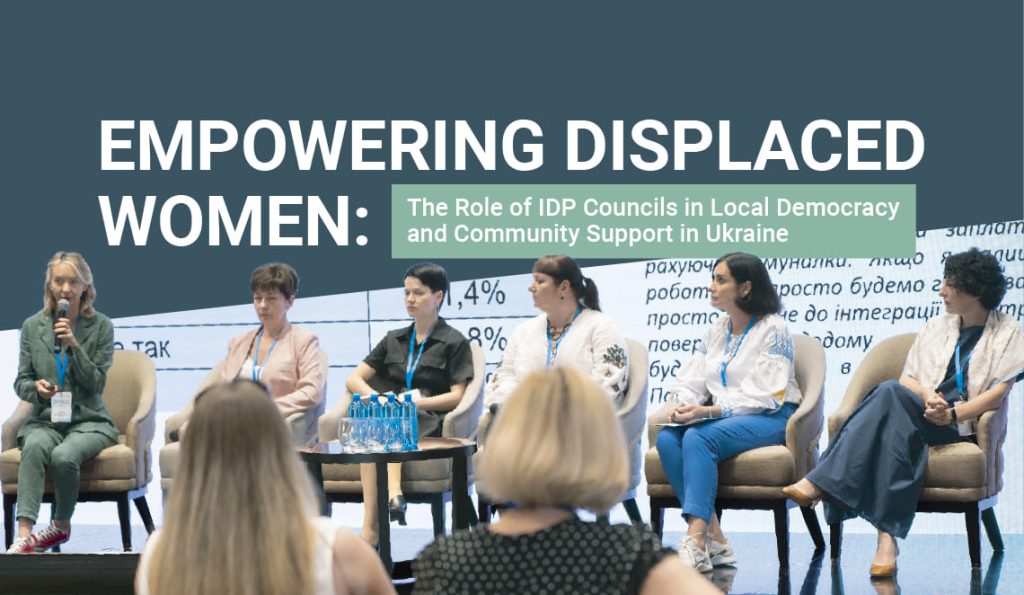
Author: Valeriia Vershynina, executive director of the Charitable Organization “Charity Foundation “Stabilization Support Services”, co-author of the concept of creating IDP Councils in Ukraine
Ukraine is facing an ongoing humanitarian crisis affecting millions of its citizens. Since the occupation of the east of the country and the annexation of Crimea by Russia in 2014, many people have been forced to flee their homes in search of safety and stability in other regions. These displaced persons, also referred to as internally displaced persons (IDPs), have faced numerous challenges, including access to basic civil rights, social services, housing, and opportunities to participate in community life. One solution was the creation of IDP Councils, an important element of local democracy and a tool to support their members.
Established in 2019, the first initiative groups for IDP Council were intended to give displaced people a voice in local issues and to facilitate their integration into their new communities. In this article, we explore the role of IDP Councils in strengthening local democracy, with a special focus on their impact on displaced women. Women’s participation in these Councils not only contributes to their personal and professional development, but also plays a key role in supporting and rebuilding communities affected by the war.
And there are we focused on the deeper gender aspects of women’s participation in IDP Councils and examined how unpaid work affects their position in the community and how local democratic initiatives can support not just women, but all displaced people, in the broader context of social change.
Context and Significance of IDP Councils
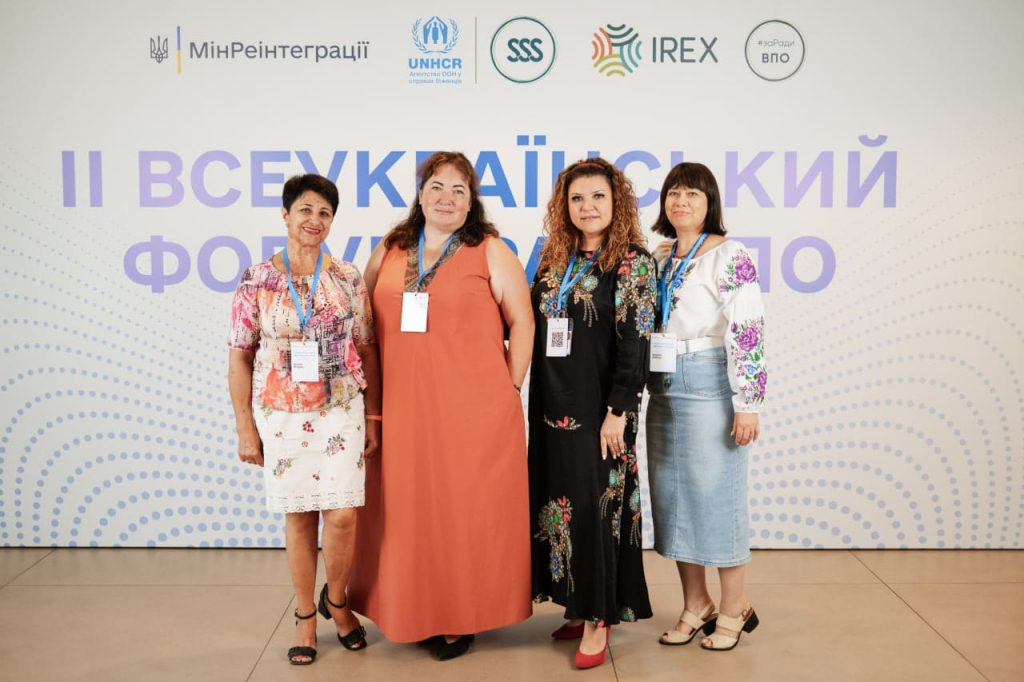
The total number of displaced people in Ukraine as a result of the war unleashed by Russia has increased from 1.5 million in 2014 to almost 5 million in 2024. Most of these people have IDP certificates. According to the UN Office for the Coordination of Humanitarian Affairs (or OCHA), more than 5.4 million people are internally displaced, with 63% of IDPs being women and 37% men.
IDP Councils are advisory and consultative bodies. According to Ukrainian legislation, their activities are unpaid. The idea of creating such councils arose in 2019, when our Charitable Foundation established the first 5 initiative groups for IDP Councils in the eastern oblasts of Ukraine. Donetska, Luhanska, Kharkivska, Zaporizka, and Dnipropetrovska Oblasts had suffered the most from war, so it was most relevant to establish IDP Councils in these oblasts. The situation changed in 2022. 25% of the country’s territory was occupied as a result of the full-scale invasion, and 8 million people were displaced. In one way or another, there were no oblasts or even communities in Ukraine that had not been affected by the hostilities.
IDP Councils are a response to the challenges posed by displacement. They aim to reduce inequality and vulnerability internally displaced persons face. Council members are empowered to influence decision-making related to their rights and interests. They also help improve living conditions in their new communities. This is an important step towards integrating IDPs and strengthening their social resilience.
In 2023, together with the Government of Ukraine, we developed the Council’s Model Regulations on Internal Displacement. We supported the establishment of more than 840 Councils across the country, covering two-thirds of all communities in Ukraine. Mapping IDP Councils — conducted by the Foundation with support from the Ministry of Reintegration allowed us to calculate the number of established Councils, compare their features in large cities and rural areas, and identify the Councils’ needs for capacity building and expert services.
Gender Aspects of IDP Council Work
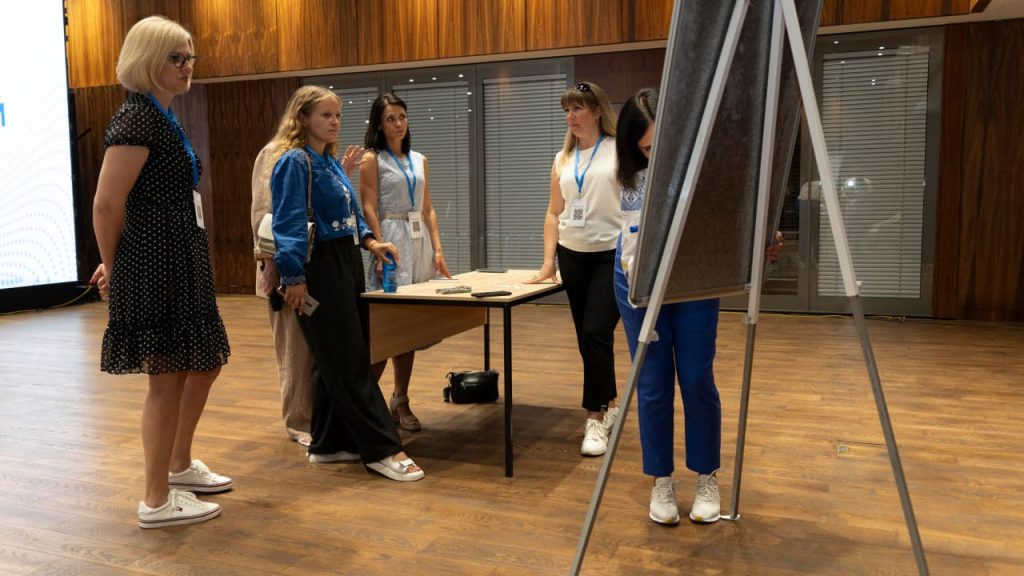
The imbalance of power and resources between women and men is evident, especially when viewed through the prism of paid and unpaid labor. An analysis of 677 IDP Councils conducted in June 2024 showed that 446 of the Councils were chaired by women and 195 by men (35 Councils have not yet approved their composition).
In total, these 677 IDP Councils have 9,678 members, of which 7,433 are women.
Here is what these data tell us:
66% of leadership positions in IDP Councils are held by women. This majority percentage demonstrates the significant role of women in IDP Councils, which contrasts with other areas where women are often underrepresented in leadership positions.
Women make up 77% of IDP Council members. This figure confirms that women play a key role in the work of these councils, not only as leaders but also as active participants.
Given that women dominate leadership roles in IDP Councils, it is important to ensure that they have the support and resources to fulfill their responsibilities in an effective manner. This may include access to training, resources, and funding to develop initiatives.
Women chairing and participating in IDP Councils play an important role in supporting communities and internally displaced persons, especially in the context of conflict and crisis. This indicates that women can be important agents of social change and recovery.
These figures demonstrate that women are not only actively involved but also lead the majority of IDP Councils. This indicates that they make a significant contribution to civic activities and social support for IDPs. However, this contribution is unpaid, which indicates the need to recognize and support women’s work at the level of state policy and communities.
Distribution of Leadership Roles in Local Self-Government
Now let’s compare this data with paid positions in local self-government and the leadership of oblast administrations. The difference is significant.
Only 3 out of 26 heads of oblast state administrations that significantly impact regional development are women, which amounts to 11.5%. At the same time, 23 administrations, or 88.5%, are headed by men.
Only 8.53% of city mayors are women, while 91.47% of mayors are men. This reflects the dominance of men in the largest and most economically important settlements.
The situation in village communities is slightly better, but there is still a significant gender imbalance: 14% of women versus 86% of men hold the position of village heads.
Rural communities show more progress, with 32% of village heads being women compared to 68% of men.
The participation of women officials in decision-making positions is shaped like a pyramid: the lower the level of power and pay, the higher the proportion of women represented at that level.
Gender Disparity in (Un)paid Positions
In IDP Councils, where work is unpaid, women make up the vast majority of both leaders (66%) and members (77%). At the same time, women make up no more than 30% of paid positions (heads of oblasts, cities, and villages), indicating a systemic gender gap in access to paid leadership positions.
There is another area of activity in Ukraine that has very similar gender distribution indicators. Women held 78.3% of the lowest category C positions (positions below heads and deputy heads of structural units of ministries and other central executive bodies, heads of territorial bodies and structural units of these bodies, etc.) and 68.6% of category B positions (heads and deputy heads of oblast and raion government bodies, heads and deputy heads of structural units of government bodies).
In October 2020, Ukraine held its last local elections, during which a 40% gender quota was implemented. As a result of these elections, the number of women in local councils in Ukraine increased. In oblast councils, 27.8% of deputies are women. In raion councils, 34.3% of deputies are women. As a result of Russia’s military aggression, no more local elections have been held in Ukraine, and the number of women in local self-government bodies has been decreasing as a reaction to the ban on international travel for local self-government representatives. Despite this trend, the overall pattern has been characteristic of the situation in Ukraine throughout the years of its independence. Hostilities have not significantly changed the gender distribution in this area. However, in the future, we should expect changes related to a decrease in the number of men.
Women may actively demonstrate leadership in civic activities and social initiatives (as in the case of IDP Councils), but they face significant barriers to accessing paid leadership positions in state and municipal governance.
The gender imbalance in paid positions indicates that women, compared to men, have fewer opportunities for career development and financial rewards for leadership. Unfortunately, it was not possible to find information about IDP women who have headed local self-government bodies.
Pro Bono Work in IDP Councils: Requirements and Opportunities
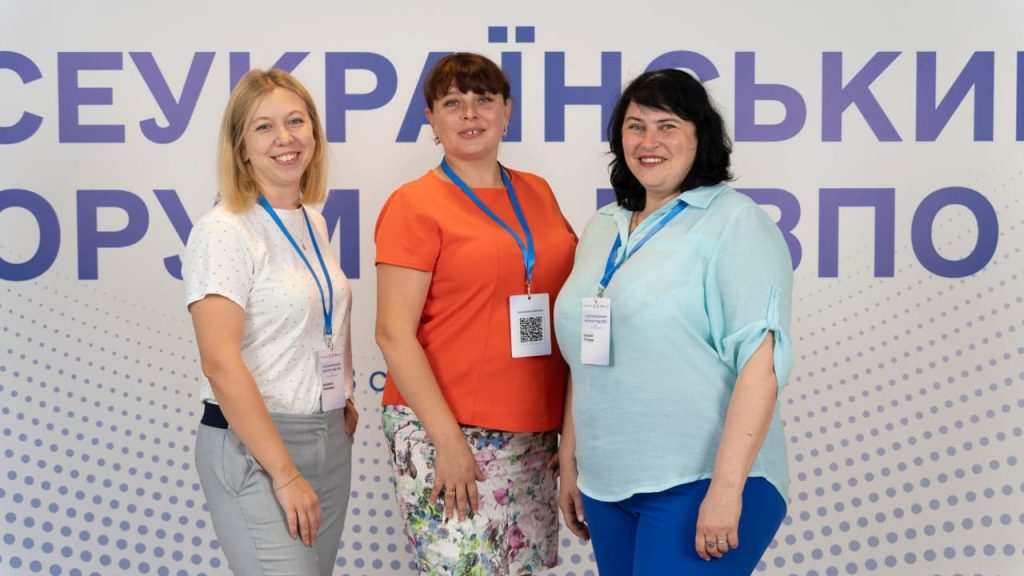
In the case of unpaid work, women often assume a significant share of duties and responsibilities, as in the case of IDP Councils, but this work remains insufficiently recognized and supported at the policy level. As a consultative and advisory body, IDP Councils communicate not only with officials but also with representatives of populations affected by the war. Often these are people who have just recently experienced evacuation, whose homes have been destroyed, and whose loved ones have been killed. This activity requires that IDP Council members possess strong skills in communicating and providing support and referrals to professional service organizations.
Like the majority of women in Ukraine, women participating in IDP Councils face the dilemmas of motherhood and caregiving in the context of active hostilities, which further complicates their involvement in the official labor market. Participation in the Councils, however, provides them with a unique platform for civic engagement and leadership and an opportunity to actively influence the life of their communities, which contributes to their personal and professional development. At the same time, it requires certain efforts and ongoing engagement, despite a lack of financial compensation. The situation is complicated by the fact that not all employers are ready to let their employees participate in public events, so some IDP Council representatives have to take off work at their own expense to participate in a Council meeting.
From our experience, we are aware of the impact on women when they participate in IDP Councils. This activity helps them build important social networks and contribute to local democracy, while emphasizing the need to recognize and support the unpaid work that is mainly done by women. With their experience in the Councils and understanding of the processes within local self-government, these women can become a talent pool for local communities and help reduce the staffing shortage resulting from mobilization and cross-border migration.
The mapping of IDP Councils conducted in June 2024 allowed us to assess the specific features of the Councils in different contexts. We could draw some conclusions on further steps needed to support IDP Councils in Ukraine.
Role of IDP Councils in the Reintegration of IDPs
Participation in IDP Councils has a dual nature. On the one hand, it provides women with important support and contributes to local democracy. On the other hand, it emphasizes the need to recognize and support unpaid work. This demonstrates how important it is to have inclusive policies that consider the specific needs and contributions of women who have been forcibly displaced.
IDP Councils create platforms for displaced women that can help them re-establish their professional identities and acquire new skills. For many women who have lost their jobs or had to change their professions due to displacement, the Councils provide an opportunity to re-engage in professional activities. Through their participation in the Councils, women gain new knowledge, develop their networks, and become active participants in local self-government. This contributes both to their self-improvement and adaptation to new living conditions.
It is also necessary to pay attention to the invisible aspects of work, such as emotional and immaterial labor. Members of the Councils often perform a significant amount of emotional labor, providing support not only to their families but also to communities and affected people. This work often goes unrecognized and may remain invisible to official entities.
Supporting IDP Councils helps to identify and recognize this invisible work, providing women with platforms for development and self-fulfillment. These Councils contribute to the development of resilient and supportive communities, which is crucial in times of displacement and uncertainty.
Inclusive policies that consider these aspects can significantly improve the quality of life of internally displaced persons and facilitate their successful integration into their new communities. Recognizing and supporting women’s emotional and immaterial labor is essential for creating a just and equitable society.
Recognizing and supporting women’s work in IDP Councils is critical to ensuring more equitable and inclusive support for all internally displaced persons. Our experience shows that these Councils not only help integrate IDPs into their new communities but also strengthen local democracy and support the development of civil society.
Conclusions
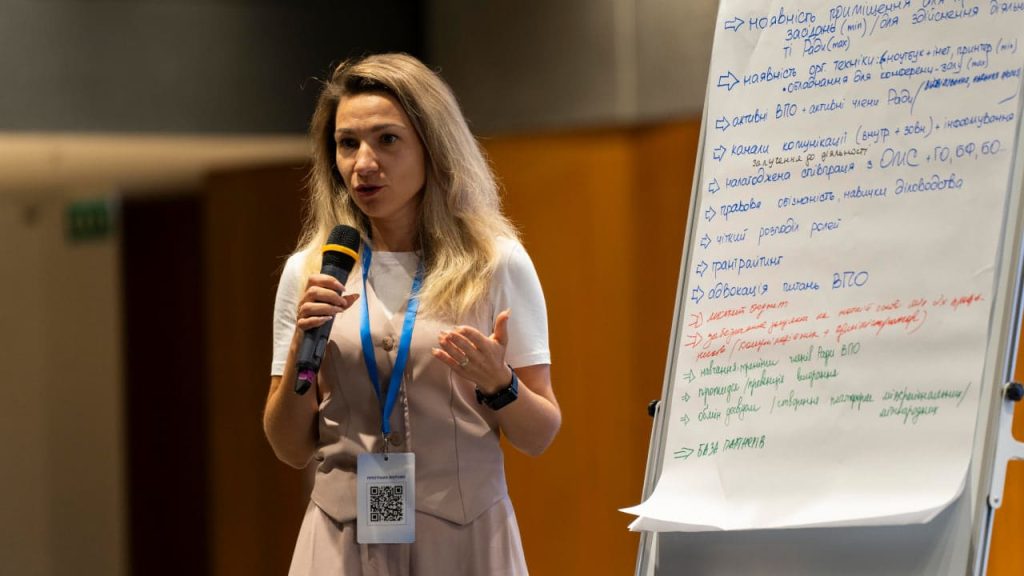
IDP Councils in Ukraine play an important role in supporting internally displaced persons, especially women. They provide them with opportunities to participate in local democracy and civic initiatives. These Councils may not be legal entities or directly provide services, but their advisory and consultative role strongly influences the development of community policies and strategies.
Our analysis showed that women make up a significant majority of both members and leaders of IDP Councils. This indicates that women assume a significant share of the responsibility for volunteer work and civic engagement, but their work remains largely unpaid and insufficiently recognized at the policy level. The gender imbalance is particularly evident when it comes to women’s access to paid positions in local self-government and other public authorities.
Recommendations
- The role of women in decision-making at all levels needs to be strengthened. Although women hold the majority of leadership roles in IDP Councils, this influence should be strengthened through official recognition of their work at the state policy level.
- It is important to increase funding and support for women’s civil society organizations working with internally displaced persons. Women will be able to expand their activities and attract more resources to address pressing issues in their communities.
- IDP Councils can play a key role in implementing recommendations regarding the provision of social services in communities and the promotion of women’s employment. Particular attention should be paid to programs that increase women’s resilience, self-fulfillment, and employment; and that provide childcare services, psychological support, and support to women affected by hostilities and displacement.
- Government policy should actively support initiatives that consider gender equality. This includes incorporating gender analysis into the planning of local initiatives, providing financial support, and recognizing the importance of unpaid work performed by women in communities.
- Strengthening cooperation between IDP Councils, women’s organizations, and local authorities is important to more effectively implement programs focused on supporting women. This will help create sustainable platforms for community development and the integration of displaced persons.
IDP Councils are an invaluable tool, one that can strengthen the role of women in community life. Thus, the support and development of IDP Councils should be a priority of state policy.